Wednesday, 25 July 2018

How Much Will You Save By Using Fertigation?

Image source: isaayle.com
Agriculture is a billion dollar industry today. It provides food for the American people, raw materials for processed goods, feed for livestock, and recreation in crops like tobacco. It is also an expensive business in terms of upkeep. Going into agriculture can be risky, as a bad yield can heavily dent finances.

There are many factors affecting agribusiness. Some of the main cost drivers are manpower, water for irrigation, fertilizer, and other chemicals like pesticides.

Unless your business revolves around growing cacti, relying on rainwater is virtually impossible for any other agricultural endeavor. This makes water the biggest necessary resource next to the land itself. And while water may seem cheap for a regular household, an acre of farmland can use up to 4,000 gallons every day. Pumping water can cost $20 per hectare to over $300 per hectare, depending on the location.

Image source: helpmore.net
This is why fertigation makes such a big difference in cutting costs. Fertigation combines irrigation and fertilizer application by mixing the nutrients in the water. This method saves farmers at least 25% on water, while increasing fertilizer efficiency by 80%. Not only does this reduce water consumption necessary for the crops, this system also removes costly factors like soil and nutrient erosion due to irrigation.

Since its founding in 1994, the EZ FLO fertilizing systems has secured 13 patents on a unique and inexpensive injection process. These systems are comprised of environment-friendly solutions to water and fertility issues. For more useful information on fertigation, visit this blog.


Friday, 6 July 2018

What Are The Main-Line Models Of Irrigation Systems For Homes?

For homeowners, a huge part of the joy of owning a home comes from taking care of the landscape and garden.   Some people spend a considerable amount of time, money, and effort into creating the best-looking landscape they can.  Not only is it a source of pride, but it also provides a sense of fulfillment to homeowners, especially when they accomplish the task themselves. 

Enter EZ-FLO. 

EZ-FLO has come out with a number of injection tools for gardeners and landscapers everywhere.  For over two decades, the technology of EZ-FLO has helped homeowners transform their landscapes and gardens beyond expectations. 

Image source: ezfloinjection.com

One of the most popular injection tools EZ-FLO has developed is the main-line unit, which is designed to work wonders for an irrigation system.  There are several types of main-line units, all of which were created to take care of static water pressure even during down times of irrigation systems.  Doing so eliminates any loss of pressure when the irrigation system switched on.

As mentioned, there are a number of main-line systems for homes, seven to be exact.  The bigger the unit, the less refilling it needs.  This also depends on the size of gardens and landscapes.  Bigger areas are better served by larger units to eliminate the need for multiple refills.  

Image source: ezfloinjection.com

EZ-FLO fertilizing systems include economical, flexible, and easy-to-use injectors that are ideal for backyard gardeners, commercial landscapers, and farm owners. Learn more about the company by visiting its official website.

Tuesday, 29 May 2018

Precision Agriculture: Key Concepts And Benefits

Agriculture has gone through a massive transformation through years, and technology has had radical effects on how farming is done and how agribusiness has been shaped to what it is today. One of the key concepts known today is precision agriculture or simply precision ag, which harnesses information technology in farm management to ensure that the soil and crops receive what they need for their maximum health and productivity.

Image source: Pixabay.com 

Precision ag is steered toward making farming more accurate, controlled, and well-managed when it comes to growing crops as well as raising livestock. It makes use of IT tools and techniques that include sensors, GPS, drones, robotics, autonomous vehicles, and things like GPS-based soil sampling to achieve these goals. 

It is believed to take off in the early 1990s after the introduction of GPS guidance, and today it’s so widely applied while other new technologies are taking off. Some popular precision farming practices are automated steering systems, which show drivers the way to follow in the field using satellite navigation systems; geomapping to produce maps that contain precious soil and nutrient information; and sensors and remote sensing to collect data from a distance to evaluate soil and crop health. 

Integrated electronic communications, too, enhance links among different components of the farming system such as between the tractor and dealer and tractor and farm office. Predictive analytics software also informs farmers about crop rotation, harvesting times, and soil management. 

Image source: Pixabay.com  

The EZ-FLO fertilizing systems were developed to provide irrigation and injection technologies for homes, cities, parks, gardens, sports fields, resorts, and any other form of growing and landscape. Since EZ-FLO’s inception, the company, under the leadership of its CEO, Dan C. Gilmore, has grown into a leading commercial and residential fertigation systems manufacturer with more than 250,000 units installed in over 20 countries. More on the company and its products website.

Monday, 7 May 2018

Fertilizing Responsibly

Much of the food that plants need come from the soil; a healthy soil equals a crop rich in nutrients. Because of this, fertilizers have to be used in farms and gardens by applying them to the soil so that most of the nourishment the flora needs are provided. These nutrients include nitrogen, phosphorus, potassium, and others.

Image source: walmart.ca

However, fertilizing should be done responsibly. Otherwise, there could be negative effects on plants and the environment; not to mention extra, unnecessary costs would also be incurred. The EZ-FLO fertilizing systems, which integrate irrigation and application of fertilizers, are capable of decreasing fertilizer consumption by 70 to 90 percent and reducing water usage by 25 to 50 percent.

This can help optimize the growth of crops because they receive no excess fertilizer, thus minimizing “burning” them, and do not drown in a glut of water. Moreover, with the right amount of fertilizer, the plants become less prone to infestation of pests, the onset of diseases, and wilting during droughts, and the soil becomes as fertile as possible.

Less water reduces the likelihood of runoff and leaching, which can contaminate waterways with pollutants, including nitrogen, phosphorus, and more. Only a sufficient amount of water should be supplied in farms and gardens so that there would be no adverse impact on water quality.

Image source: maximumyield.com

Learn more about fertilizing responsibly by visiting this EZ-FLO website.

Friday, 6 April 2018

Understanding The Different Components Of a Drip Irrigation System

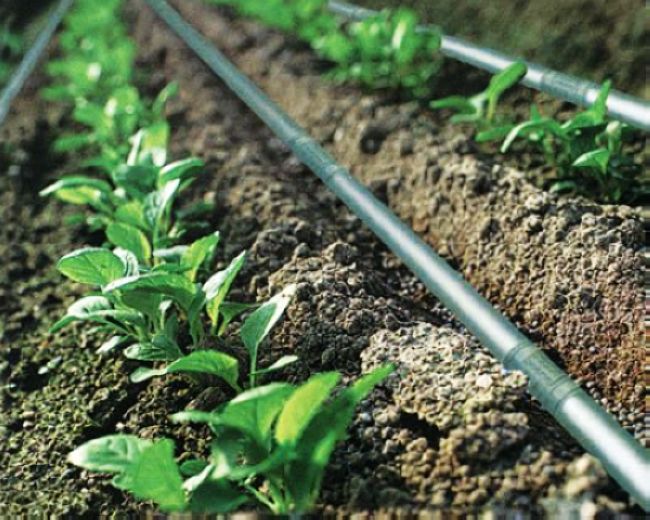
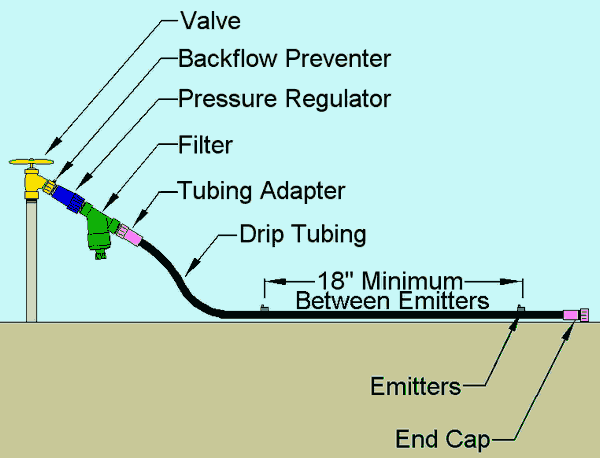
Drip irrigation has helped improve water and fertilizer management on countless farms over the years. Its mechanisms may vary, depending on how it was designed, but the major components that comprise it are listed below:

Image source: financialtribune.com

Valve: The valve serves as the entry point of the water into the irrigation system. A pump can also be installed to increase the pressure, especially if the source of water is natural, such as wells, lakes, or rivers.

Backflow preventer: In drip irrigation, there is the possibility that dirt and animal excretion can be sucked back into the system, which can contaminate the water source. Backflow preventers have to be installed to stop this from happening.

Pressure regulator: While a pump is sometimes needed to increase pressure, a pressure regulator or pressure-reducing valve is necessary to ensure that water or fertilizer flows at a constant level.

Filter: There are two reasons a filter is needed. Firstly, it cleans the water, ensuring that plants do not receive unwanted particles. Secondly, it prevents debris from clogging in the irrigation system, prolonging the useful life of the equipment.

Distribution lines: These include the drip tubes that convey water from the source to the plants. The hoses or pipes can either be placed above or under the soil.

Image source: irrigationtutorials.com

Emitters: These devices are where water is dripped, and these are designed to control how fast water is delivered.

EZ-FLO fertilizing systems include drip irrigation solutions that are suitable for all types of growing that uses either organic or synthetic methods. Visit this website for more information about the company.

Tuesday, 12 December 2017

The Benefits Of Fertigation

Fertigation is the application of fertilizer materials through the irrigation system. It is commonly via traditional spray irrigation, or through center pivot and micro sprinkles. Think of one’s fertilizer being gently fed in small amounts every time the irrigation system waters, allowing plants to develop healthier root masses for strength, drought tolerance, and less susceptibility to insects as well as disease.

Image source: Grow Organic 

There are different benefits that make fertigation the preferable method of fertilization. According to a recent study investigating fertilizer application using fertigation versus traditional granular application, fertilizer uptake into plants can climb to 90 percent versus lower absorption levels for traditional ones, including time-released ones.

Fertigation promotes controlled application of nutrients and water, increased flexibility of fertilizer application, better timing of application alongside crop growth stage, and small dosage application. It also minimizes leaching and negative environmental effects. Much of the non-point source pollution (NPSP) in the country is the result of fertilizer runoff, which can be eliminated when fertilizer is supplied to the landscape in small amounts, entailing greater absorption by the plants.


Image source: Pixabay.com

Fertigation also promotes increased water and fertilizer use efficiency, potentially reduced fertilizer inputs and production costs, and fewer weeds as fertilizer is only applied to the crop or plant. While there may be potential concerns such as increased management, the need for water-soluble fertilizer, and caution against emitter clogging, investing in an appropriate and high-quality fertigation system and fertilizer is likely to mitigate the risks and provide better results.

EZ-FLO Fertilizing Systems were developed to provide irrigation and injection technologies for homes, cities, parks, gardens, sports fields, resorts, and any other form of growing and landscape. Learn more about it on this website.